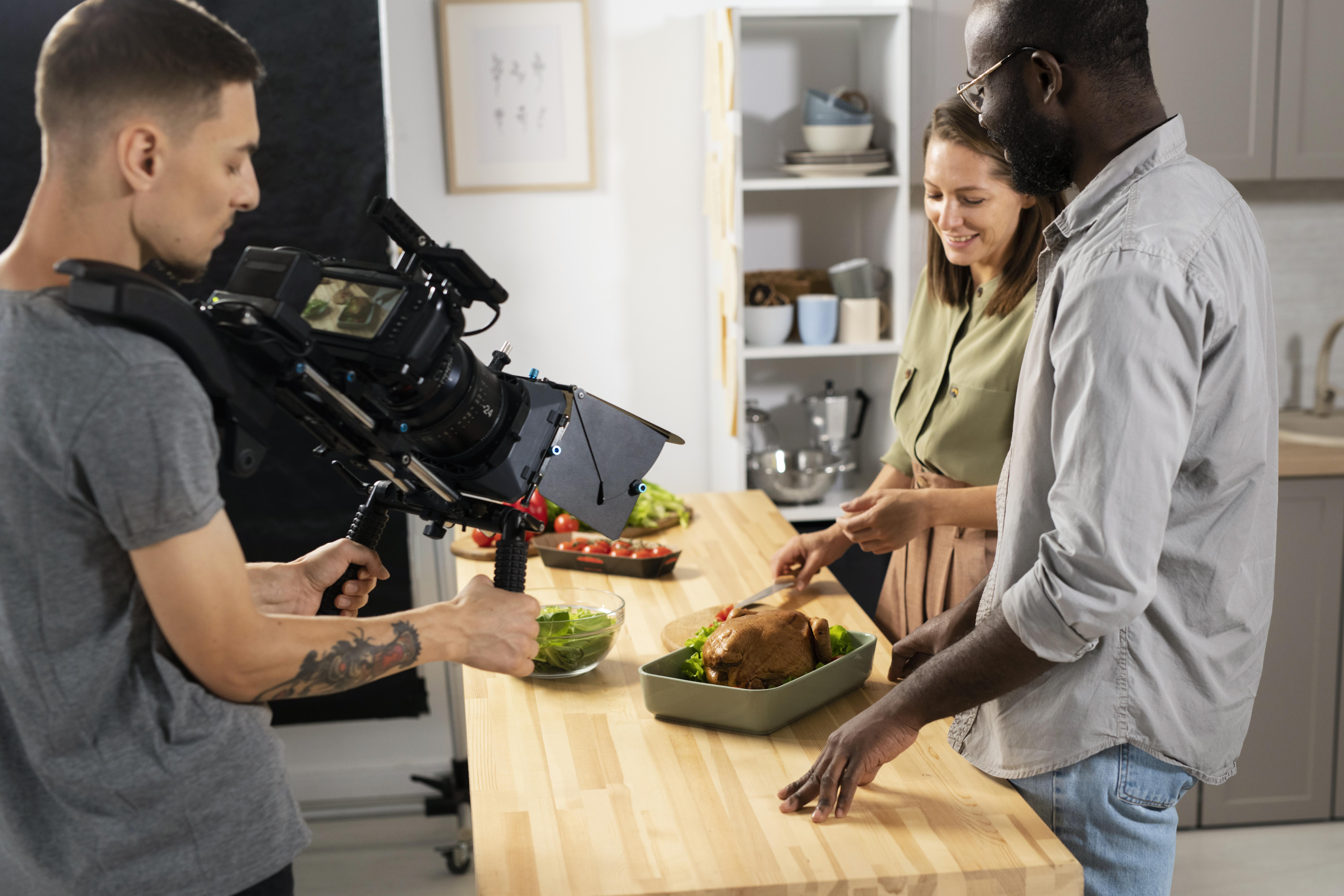

As the team lead of a production business, I'll very often come across either an upcoming cinematographer,or "an experienced one",with an interest in joining my team. Over the years, I've learnt to hire slowly rather than hire quickly without scrutiny and regret later.
There are factors to consider when bringing someone on board, and these same factors could also be used by a client to exclude you from potentially getting contracted. There are more than seven, but I'm going to touch on these specific ones,because they're the ones I've seen cost people the most opportunities.
Discipline
I once contracted a guy who I thought we'd work together with for a long time. But when the production day finally arrived, he kept being distracted by his phone. Oh man, I didn't like it. Instead of looking for great compositions, he was constantly switching between shooting the event and scrolling through his phone.
And you'd guess right,that was the first and last time I contracted him. When someone gives you a gig, do your best to stay in the game the whole time. Otherwise, you'll miss recording great moments and reactions, and that will cost the production a lot of good shots.
Show up fully,mentally and physically. A distracted operator on set is more than an inconvenience; it's a liability to the whole production. Every moment you miss is gone forever.
Lack of Gear
As much as you might survive in the industry for some time by renting equipment, you might also miss a lot of opportunities where you could have just shown up with your own available gear and charged the client less,because your expenditure for the production is minimal.
Renting equipment can run your budget too high, making you too expensive for your targeted clients. There's also the reliability factor: when you own your tools, you know exactly what you're working with. Rented gear introduces uncertainty you don't need on a shoot day.
Invest in your own gear as early as you can,even if it means starting small. A camera you own is always better than the best camera you had to return by 6pm.
"No one wants a production person with mediocre skills, whether the client is paying well or not. Always be learning something new to improve yourself."
Mediocre Skills
On this one, I can't emphasise enough. No one wants a production person with mediocre skills,whether the client is paying well or not. Shooting mediocre videos and photos will cost not only your reputation but also your portfolio.
Always be up to date with the best skills. This is often more easily achieved when you own your gear, since you'll have more time to practice and improve outside of paid work. The industry moves fast,what looked professional two years ago may look amateur today.
Treat skill-building as a non-negotiable investment. Watch tutorials, study work you admire, practise on personal projects. The people getting contracted consistently are the ones who never stopped learning.
Being Too Expensive
"You're too expensive",I can't remember how many times I've heard this from clients. One of the things I had to learn is how to structure packages and understand my target client's ability to afford me.
You might not always charge all your clients the same price for the same type of project. A good place to start is by asking your client if they have a budget or budget range. Without that information, it's nearly impossible to understand their capacity. Another factor that helps is having a good working relationship with the client or their agent,this helps you understand their budget estimates, whether annually or quarterly.
Don't be afraid to ask about the budget range early. It's not awkward,it's professional. Knowing their range allows you to tailor a proposal that fits, rather than sending a quote that closes the door before the conversation even begins.
Lack of Initiative
Can you imagine hiring someone for a production and having to constantly ask them to be more aggressive or assertive in their work? I'll keep this one short and simple: personally, I will never hire someone who isn't showing initiative,whether that's the drive to learn, grow their skills and experience, or even make efforts to buy their own equipment.
From my experience, a lack of initiative in these areas always translates directly into their work ethic and output. It's not about talent alone,it's about hunger. The people who are constantly pushing themselves are the ones you want on a shoot.
Don't wait to be told what to do. On set, take ownership. In your career, take ownership. Initiative is one of the qualities you simply cannot fake,and experienced team leads notice it immediately.
"Look for opportunities to volunteer yourself and your gear. It grows your portfolio, exposes your weaknesses in a safe environment, and builds relationships that lead to real work."
Lack of Portfolio
I remember a time when a close friend and I volunteered ourselves to shoot some pro-bono work for clients. What pushed us to do that was a number of potential clients who had asked to see our portfolio,and we either had none, or what we had wasn't good enough.
Look for opportunities to volunteer yourself and your gear to grow your portfolio. Of course, you have to decide how long you want to do this and choose your pro-bono projects carefully. Before I resigned from employment to fully run my company, I knew it was the right time to approach clients and propose pro-bono shoots for their business or product. Having a salary at the time meant I wasn't too stressed about the unpaid work,and it also exposed my weaknesses in certain production areas before I presented them to a paying client.
A strong portfolio opens more doors than any pitch or introduction ever will. Build it deliberately,even if it means giving some work away early on. It's an investment in your future rates.
Poor Demeanour
First impressions will always matter,whether the client has already assured you of the gig or not. How you dress and carry yourself matters enormously. If you look careless or speak without confidence, the client will often translate that into an expectation of how the project output will look.
I once felt uncomfortable contracting someone because they talked incessantly on set, paying little attention to shooting. They kept telling me how much they knew about cameras,but I wasn't seeing that translate into their work. Poor demeanour around clients and colleagues is a huge turn-off, and it can cost you a contract you would have otherwise won on skill alone.
Let your work do the talking. Show up dressed professionally, speak with quiet confidence, and demonstrate your value through action,not commentary. People hire those they trust, and trust is built through how you carry yourself before a single frame is shot.
These seven factors are not exhaustive,there's always more to learn when it comes to growing in this industry. But in my experience, they are the ones that show up most consistently when opportunities are lost. Whether you're looking to join a production team or pitch directly to clients, the formula is the same: show up with discipline, the right gear, sharp skills, the right price, real initiative, a strong portfolio, and the demeanour of a professional.
At Jaydan Horizons KE, we hold our own team to these same standards on every single production. If you're serious about working in this industry, start checking off this list,one by one.
Work With Us